Know something about this?
Tips go directly to Florida Bureau of Archaeological Research. Chenzo Cases does not receive tips. You can usually stay anonymous.
Emergency? Call 911.
Unexplained
Is the Crescent Beach Wreck the Caroline Eddy?
In 2020 a storm uncovered the remains of a wooden 1800s ship in the dunes at Crescent Beach. Researchers think it may be the Caroline Eddy, lost in an 1880 hurricane, but nobody knows for sure.
- Where
- Dune line at Crescent Beach, south of St. AugustineCrescent Beach, St. Johns County, Florida
- When
- 6 years ago
- Case type
- Unexplained mysteryStill unexplained
- Agency
- St. Augustine Lighthouse Archaeological Maritime Program (LAMP)
The Story
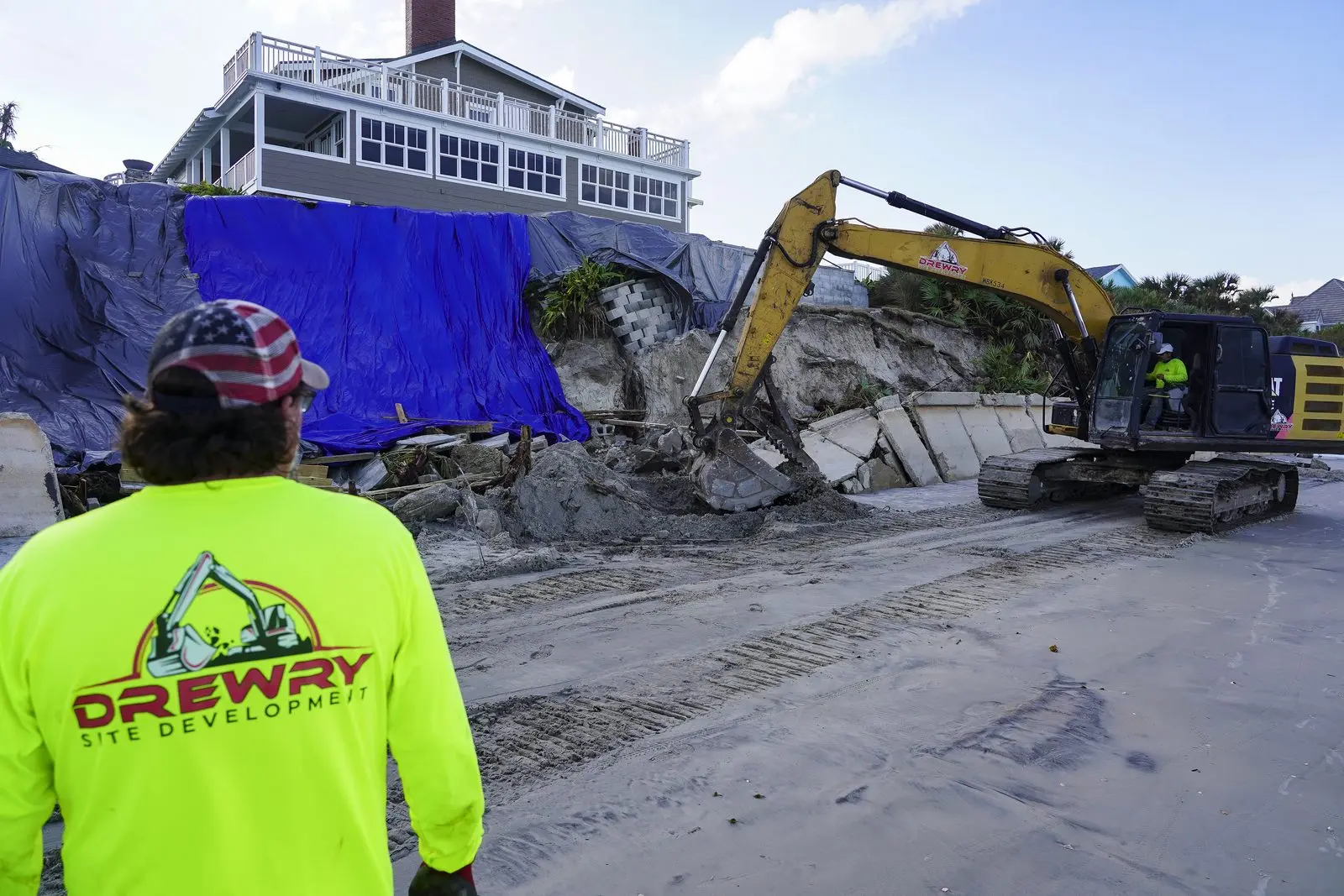
In November 2020, Tropical Storm Eta's surf cut into the dunes at Crescent Beach, several miles up A1A from the Flagler County line, and a local resident noticed heavy wooden timbers poking out of the sand. He called the St. Augustine Lighthouse Archaeological Maritime Program (LAMP), whose archaeologists recognized the remains of a wooden ship: planking, frames and iron fasteners that looked like other 1800s vessels they'd studied.
LAMP's team and Flagler College students documented the site and collected timber and iron samples, but the wreck stayed where it was. Its construction fit a sturdy American merchant ship hauling basic goods such as lumber, and reports noted some timbers showed burn marks, which may mean it was burned for salvage after it came ashore.
Searching old shipping records, newspaper accounts and an August 1880 entry in the St. Augustine lighthouse keepers' log, LAMP found a strong candidate: the Caroline Eddy, a brig built in Brewer, Maine, in 1862, which left Fernandina with lumber bound for Philadelphia and wrecked in a hurricane at the end of August 1880. LAMP's director has been careful to say there's no way to be certain. It's the best match on paper, not a confirmed identification, so the ship in the Crescent Beach dune is still officially unnamed.
Small numbers show the source of each fact. Tap one to see it.
Timeline
The brig Caroline Eddy is built in Brewer, Maine.2
The St. Augustine lighthouse keepers' log notes a wreck about nine miles to the south.1
The Caroline Eddy, carrying lumber from Fernandina toward Philadelphia, is wrecked in a hurricane after being hit by a huge wave shortly after midnight, according to LAMP's research.2
Tropical Storm Eta erodes the dunes at Crescent Beach. A resident spots exposed timbers and alerts LAMP.13
LAMP announces the find as a likely 19th-century American merchant ship, names the Caroline Eddy as a possible candidate, and begins sampling.1
LAMP publishes its research on the Caroline Eddy as the likely identity, while noting it can't be certain.25
Key Facts
What is known for sure, each checked against a source.
- The wreck was exposed by dune erosion from Tropical Storm Eta in November 2020 and reported to LAMP by a local resident.13
- Remains include wooden planking, timbers and iron fasteners consistent with 1800s ships.13
- Construction details (iron bolts, wooden treenails, copper-alloy spikes, timbers measured in inches, heavy stringers) suggest a 19th-century American, Canadian or British-built vessel suited to the lumber trade.2
- Some timbers showed burn marks, which may mean the vessel was burned for salvage.3
Questions that remain
What nobody has answered yet. Talk it through with other readers.
Question 1
Is the Crescent Beach wreck really the Caroline Eddy, or another 19th-century merchant ship?
Discuss this questionQuestion 2
Could wood-species or tree-ring results from the samples confirm or rule out a Maine-built hull?
Discuss this questionQuestion 3
Does the wreck noted in the August 29, 1880 keepers' log match this site?
Discuss this questionQuestion 4
Why do some timbers show burn marks?
Discuss this question
Chenzo Clues
Details I noticed by putting the public records side by side. Observations, not accusations and not police findings.
Clue 1 added October 7, 2026
Every sailor made it off
This is easy to miss: LAMP's first write-up says the newspaper accounts it found describe the Caroline Eddy being driven south in the storm and breaking apart offshore, with all of the crew surviving. So if this is her, the dune holds a ship, not a grave.1
How I found it: Read LAMP's original November 2020 announcement alongside its 2021 follow-up.
Clue 2 added October 7, 2026
The storm that matches the log
NOAA's hurricane database shows the fourth storm of 1880 coming ashore near Cocoa Beach on the morning of August 29 with about 105 mph winds, then crossing the peninsula toward the Gulf. By the early hours of August 30, when LAMP says the big wave hit the Caroline Eddy, the database puts the center inland roughly 100 miles southwest of Crescent Beach. That fits a ship caught on the storm's northern side and pushed down the coast.26
How I found it: Pulled storm AL041880 from NOAA's HURDAT2 file and measured from its 6-hour positions to the Crescent Beach site.
Clue 3 added October 7, 2026
The keeper's date and the wreck date are a day apart
The lighthouse log entry LAMP cites is dated August 29, 1880, and places a wreck about nine miles south of the light. LAMP's 2021 story has the Caroline Eddy hit by the wave shortly after midnight on August 30. A late-night storm could explain a log entry and a wreck on back-to-back dates, but nobody has published the full log page to show it.12
How I found it: Lined up the dates in LAMP's 2020 and 2021 posts.
Clue 4 added October 7, 2026
Which storm uncovered it depends on who you ask
NBC News credits Tropical Storm Eta, and LAMP's 2020 post says the timbers showed up after a tropical storm. LAMP's 2021 follow-up instead describes heavy nor'easter erosion and says the wood first showed the day before someone called the museum. LAMP could clarify which storm did the digging.123
How I found it: Compared how each source describes the storm and the timing of the find.
Photos & Video
Official releases and openly licensed files, credited. Tap a photo to see it larger.
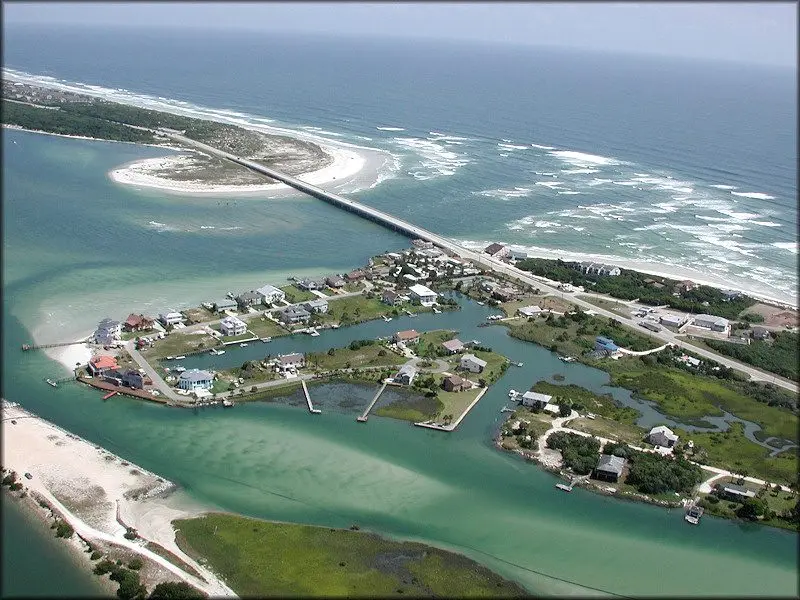
Photo credits and sources
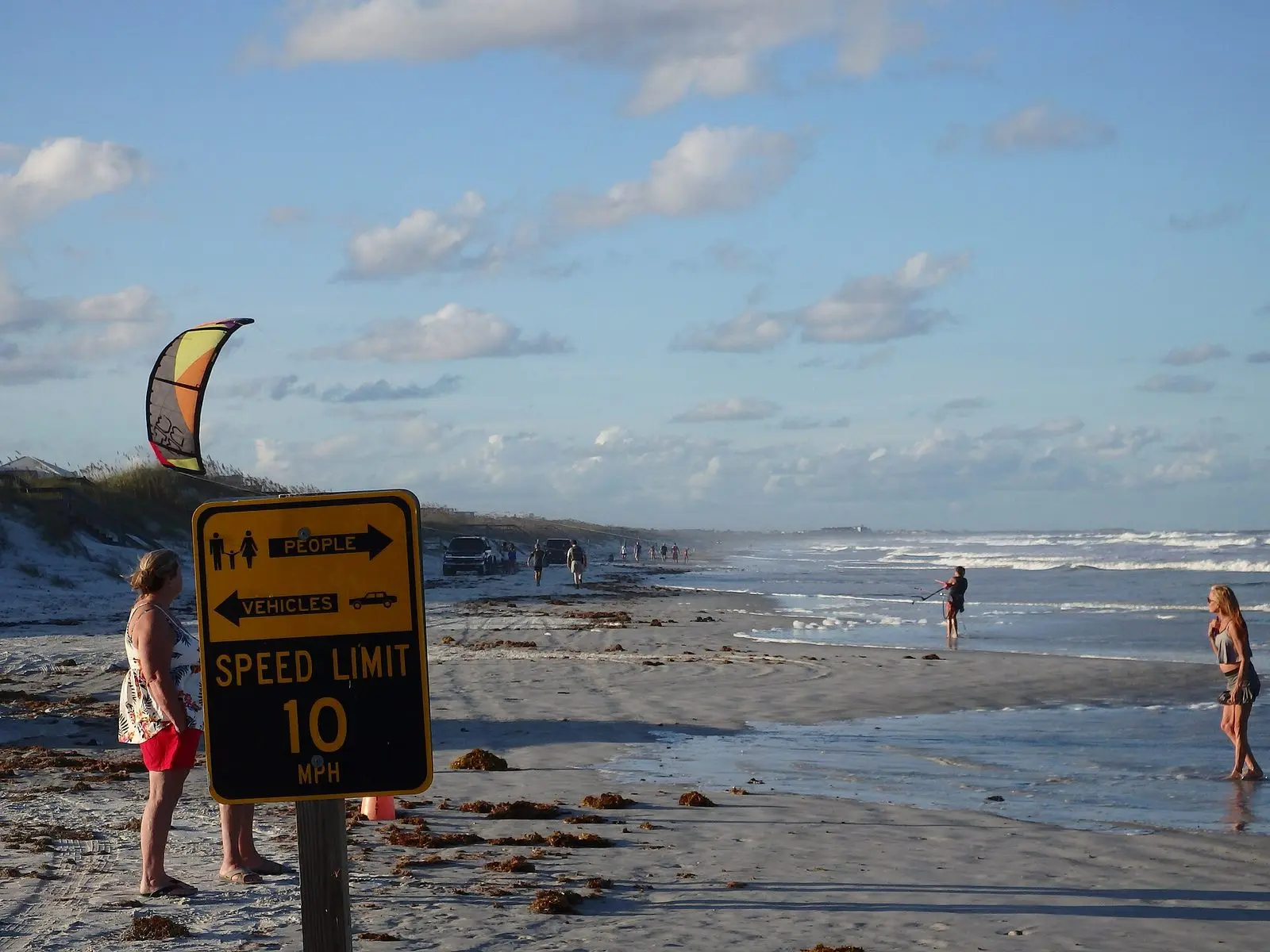
- 1. Crescent Beach, Florida, 2019. Photo: Mike Steele / Wikimedia Commons, CC BY 2.0 · CC BY
- 2. Matanzas Inlet from the air, just south of Crescent Beach and a few miles north of the Flagler County line. Image courtesy of Janet Zimmerman, Florida Inland Navigation District / Wikimedia Commons, CC BY 4.0 · CC BY
Outside coverage and documents
Linked, not copied. These open on the publisher's site.
- LAMP's drone footage, field photos and historic images of the Caroline Eddy (view on LAMP's site).Photo · St. Augustine Lighthouse & Maritime Museum; historic images courtesy Penobscot Marine Museum
Case Details
- Case number
- No public case number
- Investigating agency
- St. Augustine Lighthouse Archaeological Maritime Program (LAMP)
- Classification
- Unexplained mystery · Still unexplained
- Location
- Crescent Beach, St. Johns County, FLDune line at Crescent Beach, south of St. Augustine
- Date
- People named in public records
- Chuck Meideinvestigator
- Last verified
Sources
6 verified public sources from St. Augustine Lighthouse & Maritime Museum, NBC News, Florida Department of State, Division of Historical Resources and 1 more publisher.
Official records: 4Databases: 1News coverage: 1
Official records (4)
- 1Dune Erosion Reveals New Shipwreck at Crescent BeachSt. Augustine Lighthouse & Maritime Museum (LAMP), November 17, 2020
- 2Crescent Beach Shipwreck: The Caroline EddySt. Augustine Lighthouse & Maritime Museum (LAMP), October 11, 2021
- 4Participation: reporting shipwreck discoveriesFlorida Department of State, Division of Historical Resources
- 5Crescent Beach Shipwreck: The Caroline Eddy (video)St. Augustine Lighthouse & Maritime Museum, October 2021
Databases (1)
- 6HURDAT2 Atlantic hurricane database (1851-2025)NOAA National Hurricane Center, September 23, 2026
News coverage (1)
- 3Tropical Storm Eta unearths 19th-century shipwreck on northeast Florida coastNBC News, November 23, 2020